01
Habitat & Wildlife Protection
Securing the landscape from poaching, snaring and encroachment through ranger patrols and modern monitoring - helping re-establish historical migration routes for zebra and other species from lowlands to moorlands.
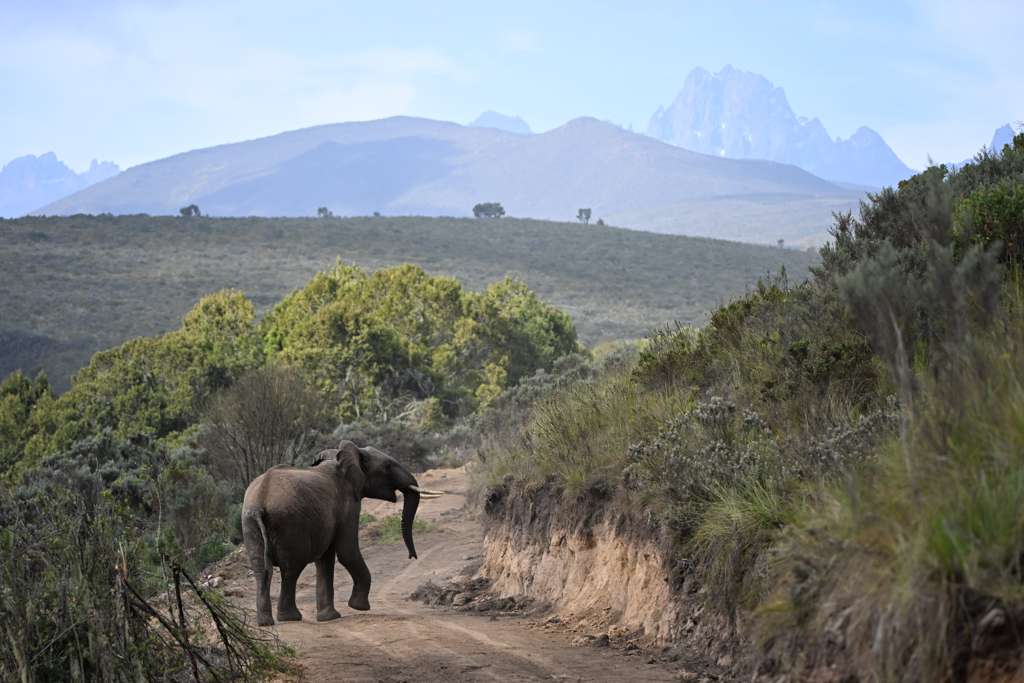
Est. 2025 · Meru County, Kenya
A Kenyan not‑for‑profit investing in the forests, moorlands and wildlife of the northern slopes of a UNESCO World Heritage Site - in partnership with government, communities and rangers.
Our mission
The Mt Kenya Protected Area is a UNESCO World Heritage Site spanning 350,000 acres of indigenous mountain forest and alpine moorland, under the stewardship of the Kenya Forest Service and Kenya Wildlife Service.
Illegal killing of wildlife with hunting dogs and snares has decimated populations here - an estimated 80% decline since 1980. Kazita Trust is partnering with KFS, KWS and Community Forest Associations to begin an ambitious reforestation and protection program, with the goal of restoring viable populations of locally extinct species - including Black Rhino, Bongo and Giant Forest Hog.
Project goals
Securing the landscape from poaching, snaring and encroachment through ranger patrols and modern monitoring - helping re-establish historical migration routes for zebra and other species from lowlands to moorlands.
Working with the Kenya Forest Service and local Forest Community Associations to build healthy, resilient forest ecosystems - with a major focus on reforestation and natural regeneration.
Partnering with local communities and Forest Associations through sustainable forest livelihoods, ensuring conservation efforts are supported and sustained at grass-roots level.
Working with Kenya Wildlife Service to supplement populations of Reedbuck, Zebra, Waterbuck, Bushbuck, Eland, Cape Buffalo, Suni, Giant Forest Hog and Black Rhino.
The Kazita project area
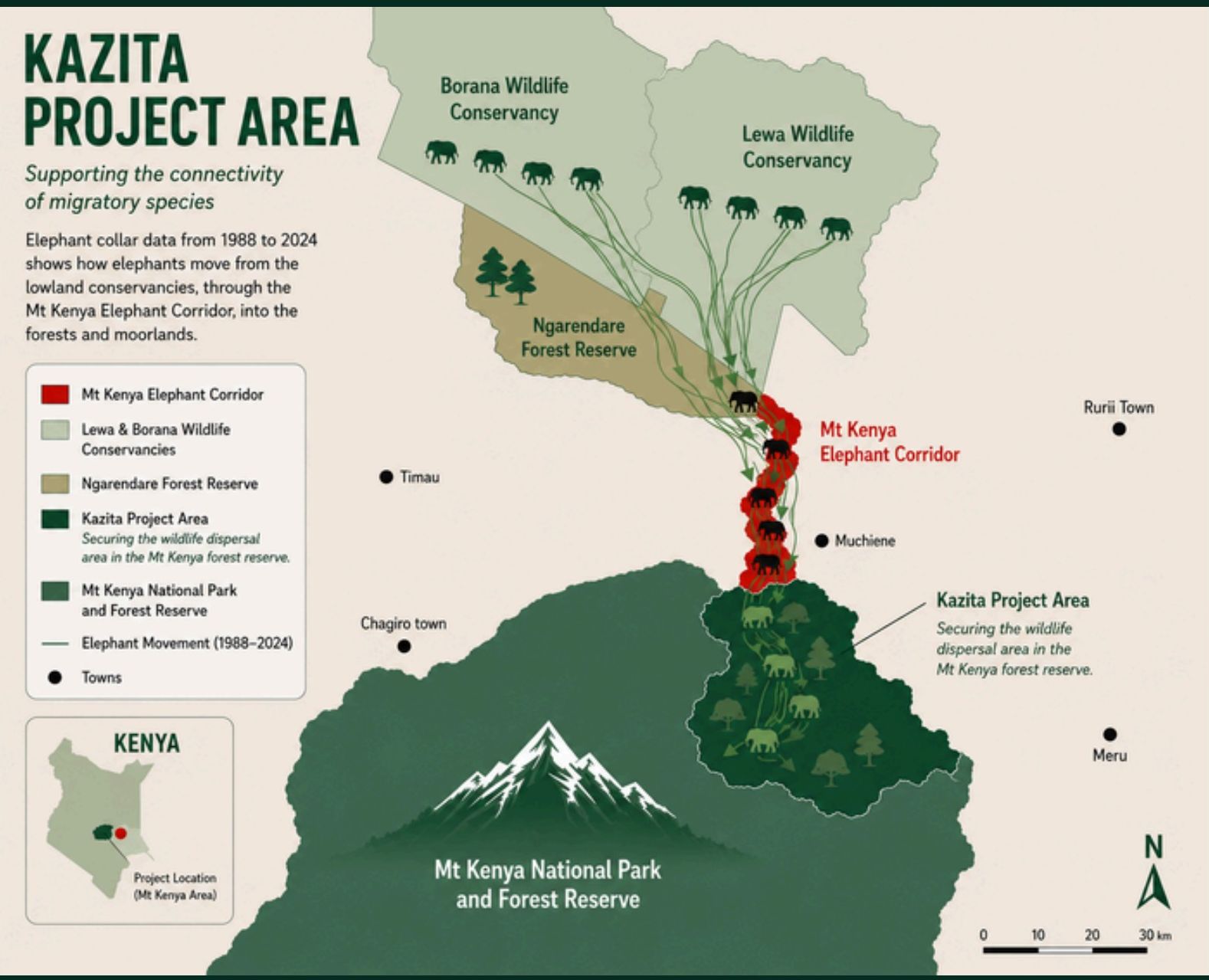
Elephant collar data from 1988 to 2024 shows how wildlife moves from the lowland conservancies of Lewa and Borana, through the Mt Kenya Elephant Corridor, into the forests and moorlands above.
Kazita secures the critical wildlife dispersal area inside the Mt Kenya Forest Reserve - the missing link between highland and lowland ecosystems.
Project startup
Infrastructure, recruitment, vehicles and operational systems. Startup patrols map wildlife distribution and threats; KFS/Kazita seed collection and nursery begin.
Field operations scale up. Planting program launches and preparation begins for wildlife reintroductions across the restoration area.
Ongoing management of the restoration area and first wildlife reintroductions - bringing species home to Mt Kenya.
Board members
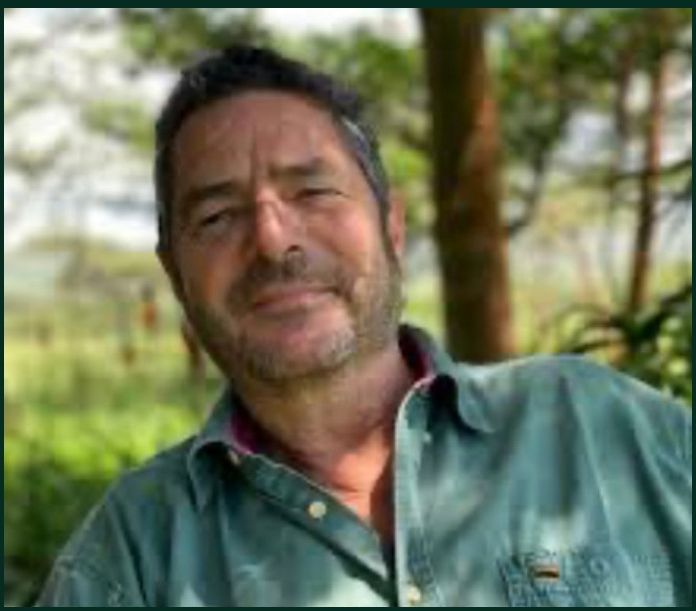
Chairman
Co-owner of Borana Conservancy, founder of Fuzz's Camp and co-owner of Manda Bay. Director of the Safari and Conservation Company. Established and managed the Ngare Sergoi Rhino Sanctuary on Lewa Downs and has dedicated his career to the protection and reintroduction of rhino in Kenya.

Head of Anti-Poaching Unit, Lewa
A distinguished Kenyan conservationist who has led Lewa's Anti-Poaching Unit since 2012, maintaining a zero rhino-poaching record. Champion of technology in protected-area management. In 2024 he completed the London Marathon and the 250 km Desert Ultra in Namibia to raise awareness for ranger welfare.
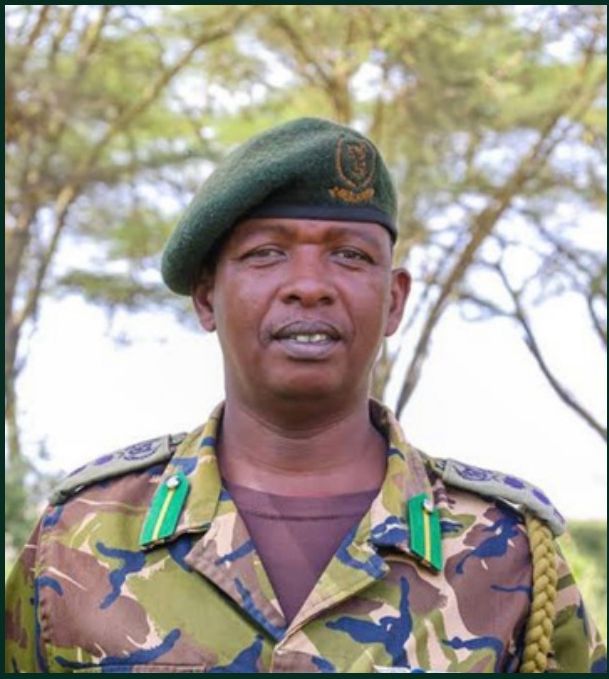
Head of General Security, Lewa
A highly experienced conservation-security specialist who knows every rhino on Lewa by name. Began his career at 18 and has spent more than 35 years supporting the Lewa vision. In 2017 he was recognised by the Kenya Tourism Board as a Champion for Conservation.
Expected outcomes
Recovery of key populations across the northern slopes.
Rangers, nursery and restoration teams recruited locally.
Rehabilitation of degraded forest inside the project area.
A blueprint for public protected areas across the country.
Get in touch
Kazita Trust works in partnership with Meru County Government, the Kenya Wildlife Service and the Kenya Forest Service. Reach out to learn how to support the work.
U.S. donations · 501(c)(3)
CAN Foundation
The Conservation of African Nature Foundation, based in Concord, Massachusetts, partners with Kazita Trust to facilitate U.S. charitable donations.
U.S. donations · 501(c)(3)
"The Friends of Tusk" Fund - Administered on behalf of Tusk by CAF America, a U.S. public charity. Tax ID 43-1634280.